MCT May & June 2014 Activities

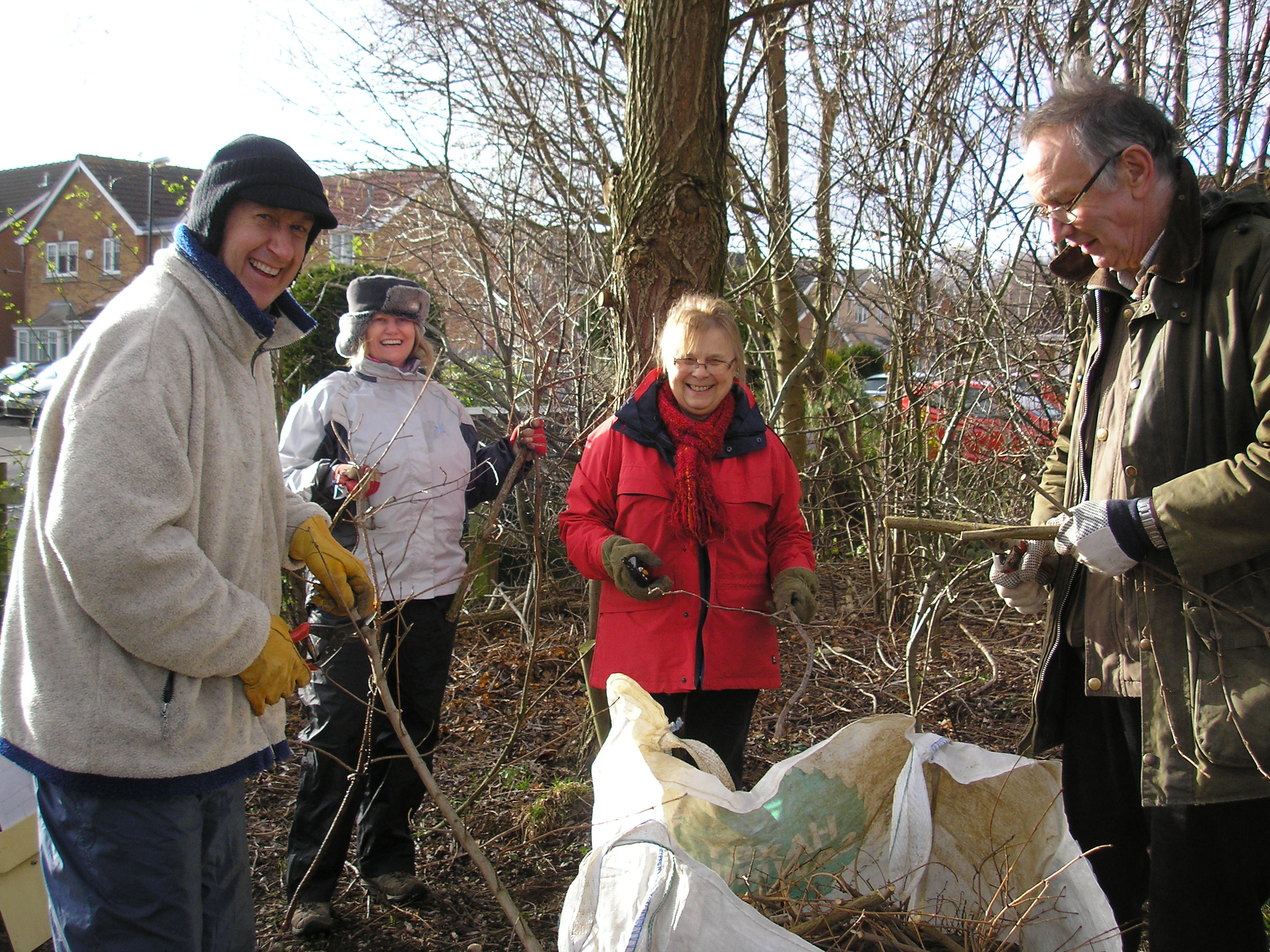
Over the last two weeks of June we have been opening up the north end of the western bund.  This was essential for us to be able to pollard two seriously overgrown crack willows there while it was still  achievable.  We removed a number of dead trees that were thus exposed and reduced the number of seriously overcrowded smaller live trees, while shaping the trees to be kept over the longer term and giving them better growing conditions.

The mild winter and wet spring have resulted in very rapid summer growth of both trees and grasses.  In June therefore MCT volunteers have spent a lot of time trimming both (after carefully checking trees for signs of bird nesting!).  Picking June’s wild flower of the month has been a challenge too, with hot competition from the Foxgloves in the shade and Ox-eye daisies round the meadow.  In the end we went for Yellow rattle (right), which we thought might have disappeared totally from the site, but only on current scarcity grounds; the tiny white flowers of Lesser Stitchwort with their 5 pairs of petals (left) were a worthy runner up.

Lesser Stitchwort JuneYellow Rattle June

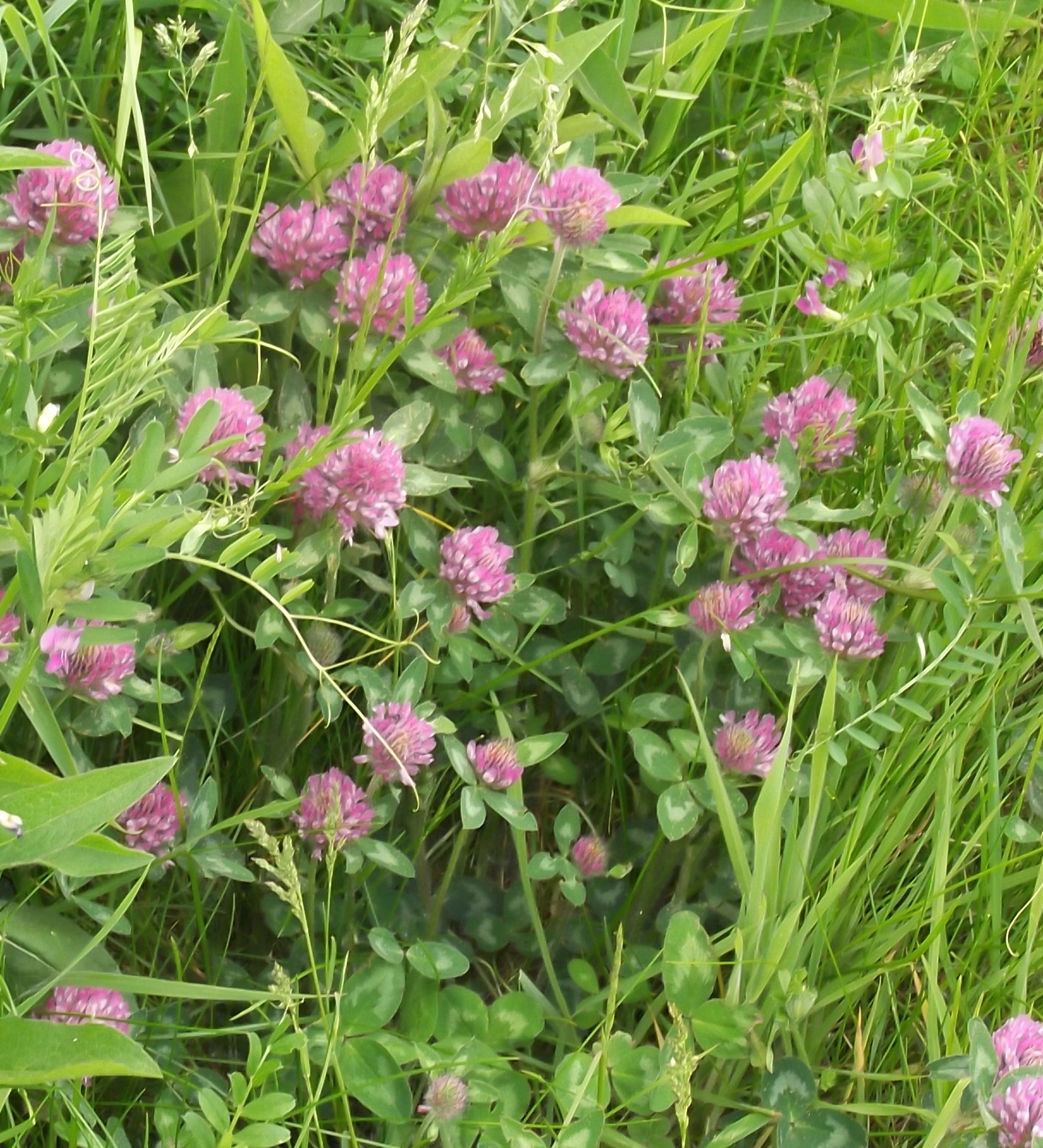
For wild flower of the Month for May we were torn between the red clover (second photo below, much improved after taking off so much nitrogen with harvested grass!) and the vetch. In Pam’s photo you can see the bee gave its casting vote to the vetch.

OLYMPUS DIGITAL CAMERA

Red clover

It was  nice at the weekend to see the attractive group of Scots Pine on the eastern bund. These were, until last week when MCT conducted a rescue exercise, largely hidden by willow, guelder rose and dead rose wood doing their best to strangle the pines.  The healthy self-sown young tree at the front in Pam’s photo below should be a useful addition to this landscape feature in a few years’ time.  Next we will improve growing conditions for the adjacent small group of Ash trees.

OLYMPUS DIGITAL CAMERA

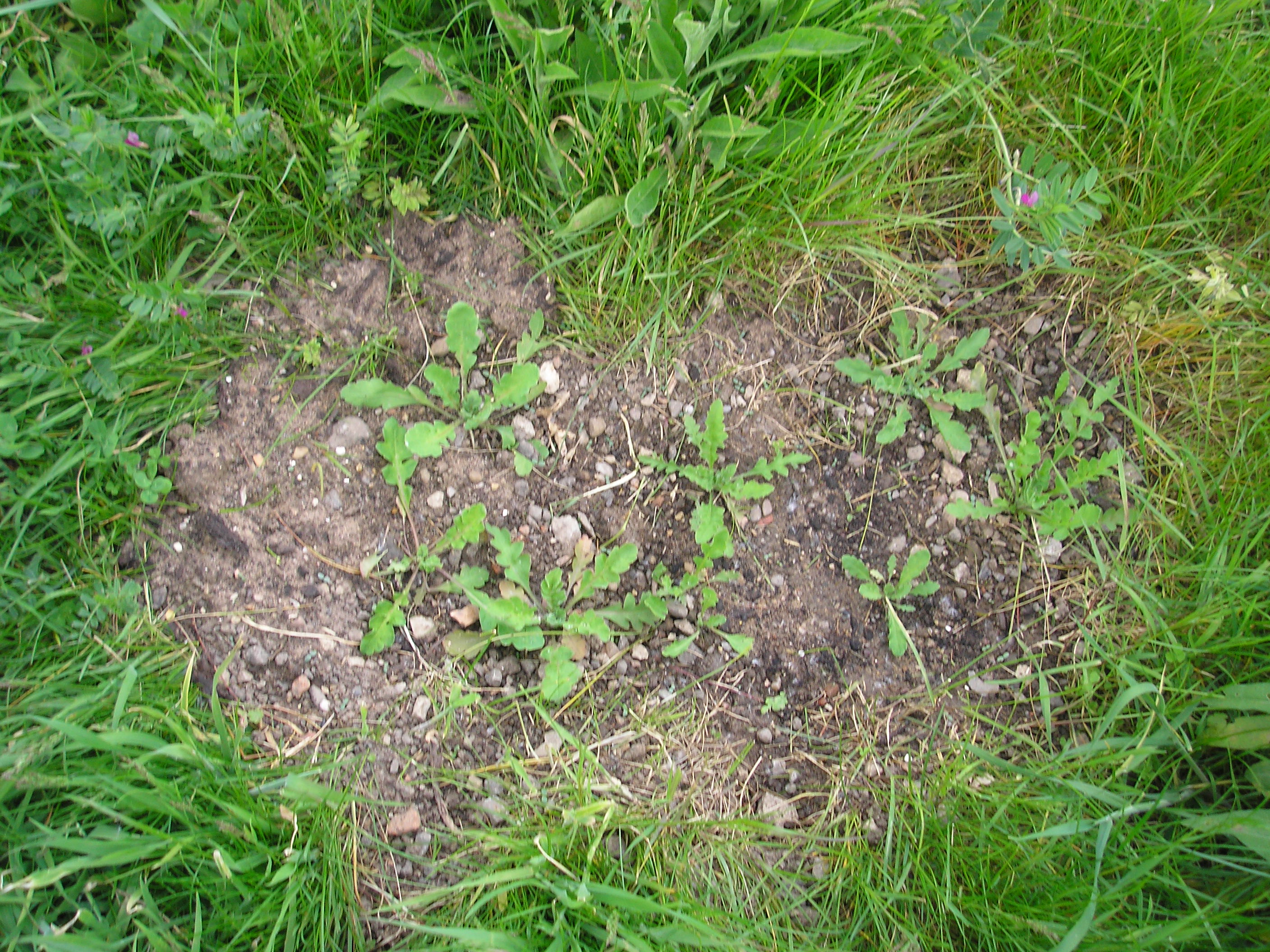
Our Third-Thursday volunteer day on May 15th allowed us to complete planting of the wild flower plug plants we had raised off site to improve biodiversity on and around the meadow.  As Pam Brown’s photos below show, we tried to make the plantings inconspicuous, but hopefully you’ll notice and enjoy the fruits of our efforts in a month or so’s time.
OLYMPUS DIGITAL CAMERAOLYMPUS DIGITAL CAMERA

Transplanted poppy (left) and cornflower (right) plug plants

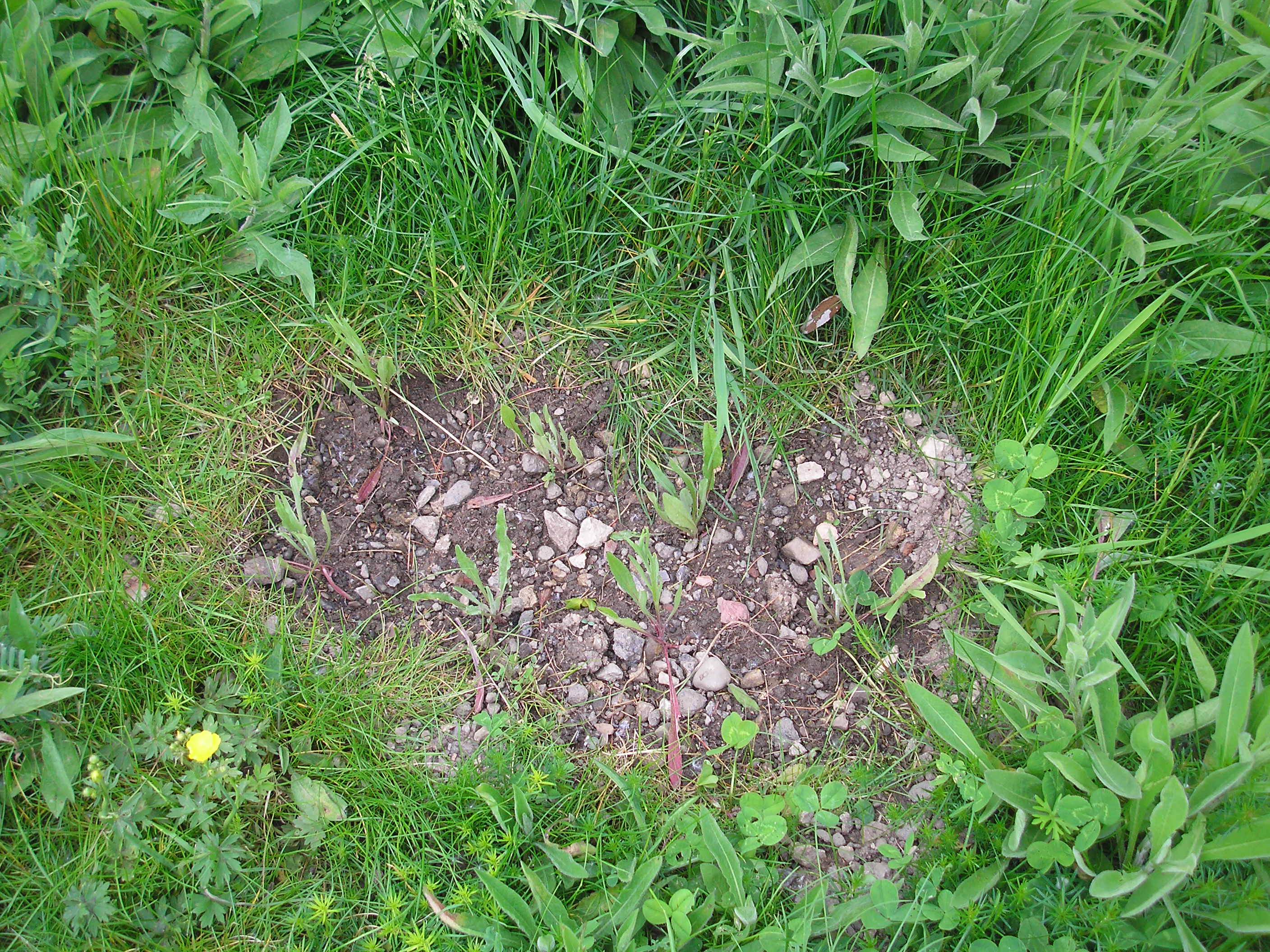
It was encouraging on May 8th 2014 to see the good germination of our grass and wild flower seed mix (6 grasses and 12 wild flower species) alongside the path at the Little Hob Moor junction where we had lowered the soil level.  MCT has also been trimming back the rapidly expanding overhanging vegetation above the path there to keep the path safe, light and airy and minimize leaf and twig fall.  It was not so encouraging though to see the re-emergence of Japanese Knot Weed at 2 places on the site (CYC have been  informed and see photo below).

Japanese Knotweed

This Orange Tip Butterfly was caught on camera by Mike Ridealgh, an MCT Trustee, while walking along the path on the site on Wednesday 7th.  It was surprisingly but very conveniently dormant on this Spanish Bluebell!

Orange-Tip Butterfly - Mayfields (3)

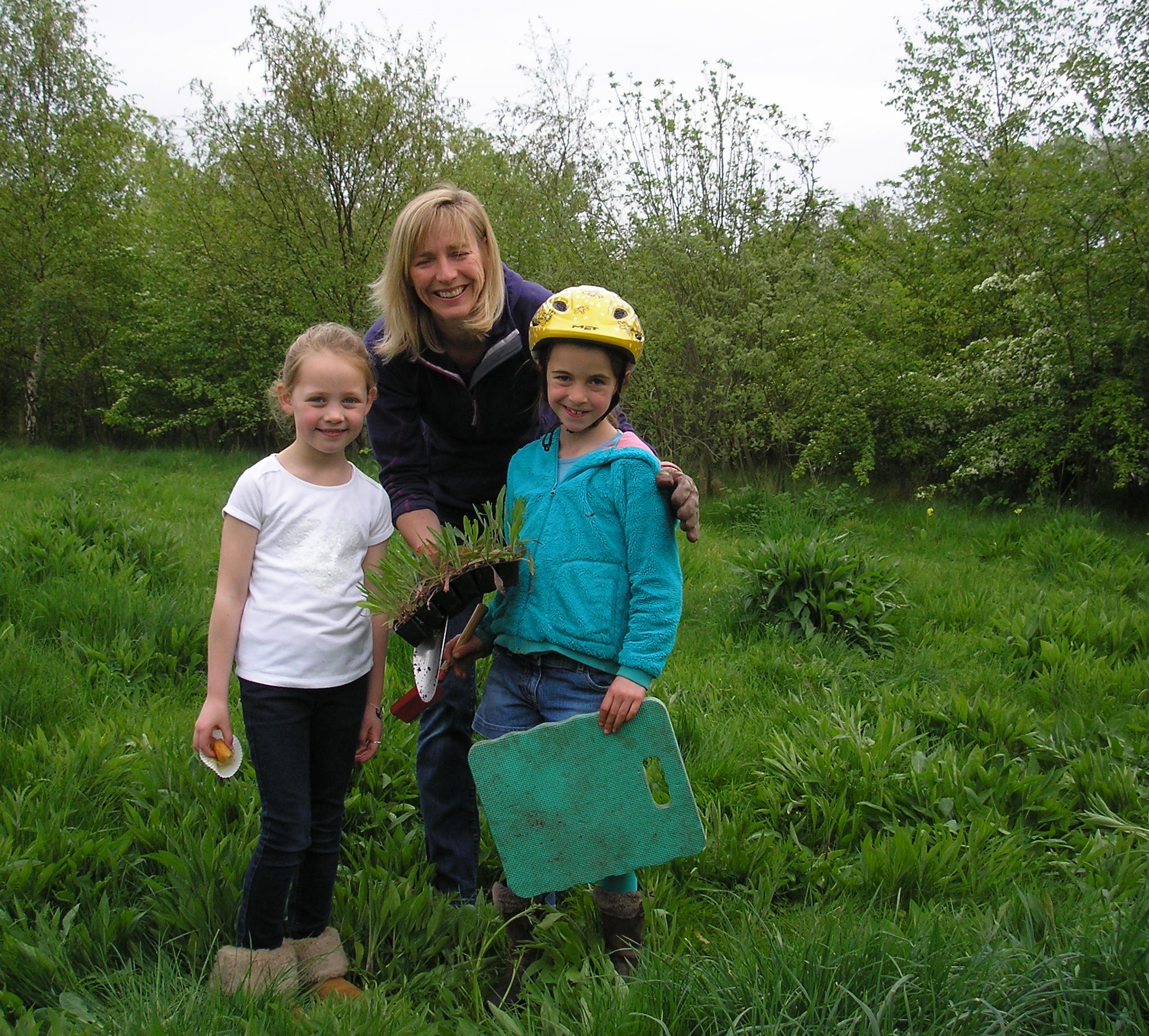
Pam Brown kindly sent us some photos from our 4th of May Sunday volunteer day.  It was really nice to see how our junior volunteers shared their mum’s and grandma’s enthusiasm for planting extra wild flowers to help make the meadow more diverse and attractive.
OLYMPUS DIGITAL CAMERA

Fortified by a supply of cakes kindly brought along by Julie, our first-Sunday-of-the -month volunteers made  good headway on May 4th with replacing some of the excessive growth of Knapweed and grass on the wild flower meadow with other species, including selfheal, yarrow, poppies, red campion and cornflowers.  The rain in the morning was light, so the new plants had to be watered in.  Thanks to Louise, Pam, Millie, Julie, Lucy, Luke and Sam for all their hard work on the very gravelly soils.  Thanks too to John and Pam Wood for helping with watering  our earlier planting beside the gate.
MCT March & April 2014 Activities

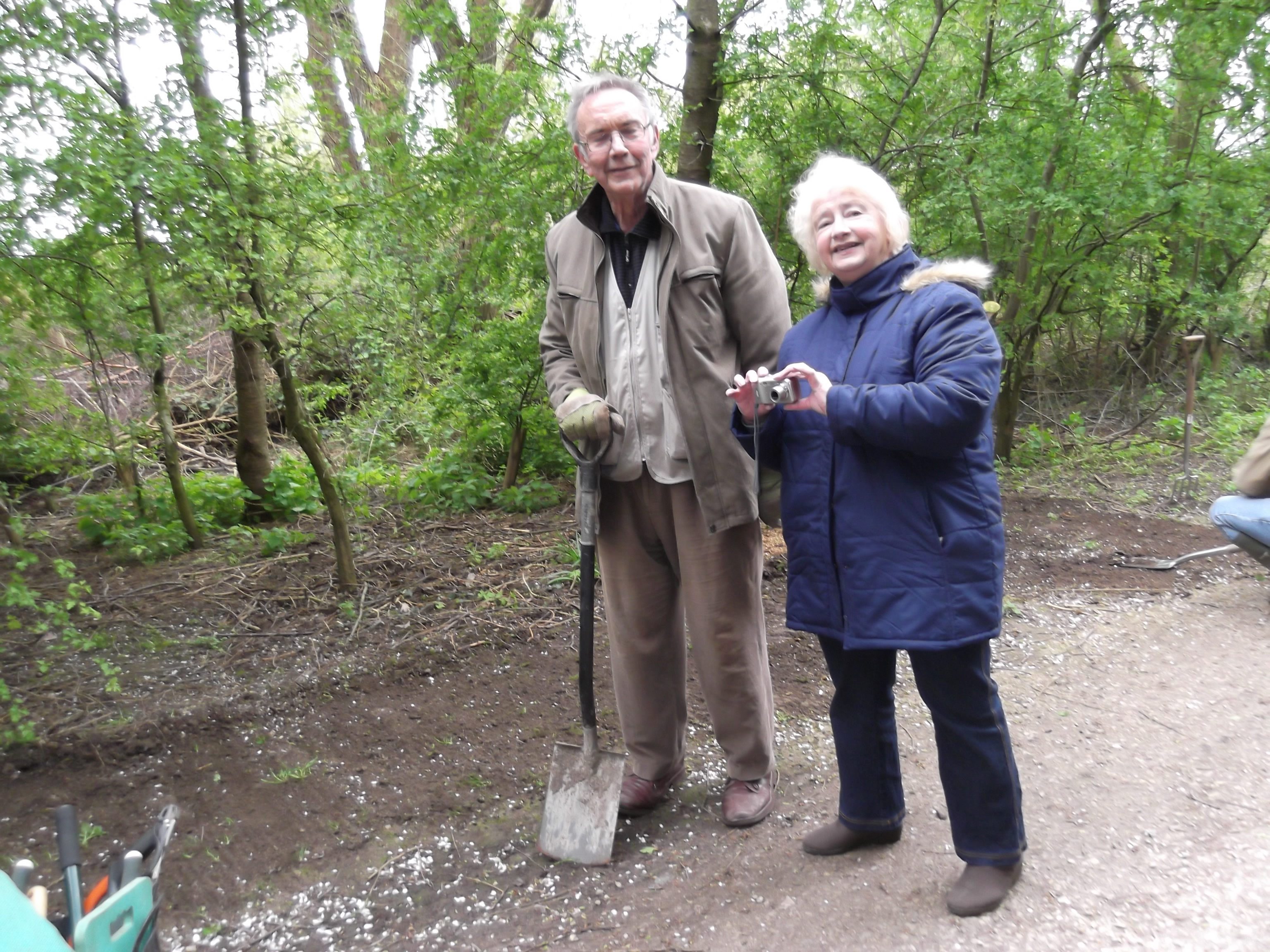
We had 6 volunteers for our Third-Thursday-of the Month session in April, and managed to lower the level of the soil beside one side of the path near Little Hob Moor to facilitate drainage off the path.  Later in April Malcolm carried out a similar process on the other side of the path.  Both areas have been seeded with a grass/short wild flower species mix. The east side was watered in by hand (in the absence of immediate prospect of rain!), but rain helped for the western side.  Louise managed to catch Pam Brown on camera for once (below, Pam takes most of our pictures usually).  Pam had been raking back soil, shifting woody litter and spreading seed too on this occasion.  It was great to see Luke and Douglas out again as well, and Paul Abbott. The path restoration session followed one planting more foxgloves, and red campion, selfheal and yarrow, after first clearing the excessive amount of dried out woody litter, near Nelsons Lane.

Pam&MalcolmOLYMPUS DIGITAL CAMERA

April got off to a bit of a mixed start, but mostly good.  Now the fence has been painted we have been able to plant a yew tree near the gate and some foxgloves and English bluebells.  We’re comparing bluebells planted “in the green” to those planted in autumn last year.  Regrettably virtually all the bluebell clumps immediately adjacent to Little Hob Moor and not planted by MCT are Spanish bluebells or hybrids, so will have to be replaced (see our Bluebell wars page for details).

Bluebell edit Our first-Sunday-of-the- month volunteer day was blessed by 15-degree dry weather and a turnout of 8.  We were particularly pleased to welcome Julie and Lucy Brown to the ranks and Luke Burnett and Douglas Blackwood, who are working towards Duke of Edinburgh awards.  With so many pairs of hands we made great progress in improving the area of Highways land alongside Nelsons Lane.  A much better view can now be had of the trees, and wild flowers will be added soon.  Sadly though, the night before, the freshly repaired and painted fence was vandalized and six slats were smashed.  The local police looked into it.  All’s well that ends well though, as a generous local dad, worried lest the vandalism had anything to do with aftermath of a family party, produced perfectly matched timber and replaced the broken slats.   He did a great job and MCT are very grateful.

On Monday 24th March we enlisted the help of an enthusiastic and very conscientious team of 3 payback Community Service people and their supervisor to finish painting the fence along Nelsons Lane, after first trimming back the overgrown vegetation.  We are grateful for their help and the excellent job they did, as you can see in Pam Brown’s photo below.  The exercise was part of the York Spring Clean Week.

OLYMPUS DIGITAL CAMERA

The treated  fence either side of the Nelsons Lane gates is shown in the top  photo on the left.

OLYMPUS DIGITAL CAMERABelow that, the other photo  from Pam Brown shows the start of the improvement of the playground equipment, using safe acrylic paint provided by CYC.  This is not strictly in MCT’s remit, but an MCT volunteer took pity on the sole volunteer working for Chase Residents Association alongside Jenny Cairns of CYC in the misty conditions,  and took some time out from scrub clearing to help out for a few hours.

We were delighted at the weekend to see several clumps of English bluebells emerging from our autumn planting of 200 bulbs.  We hope some at least will flower this year and plan to plant more.

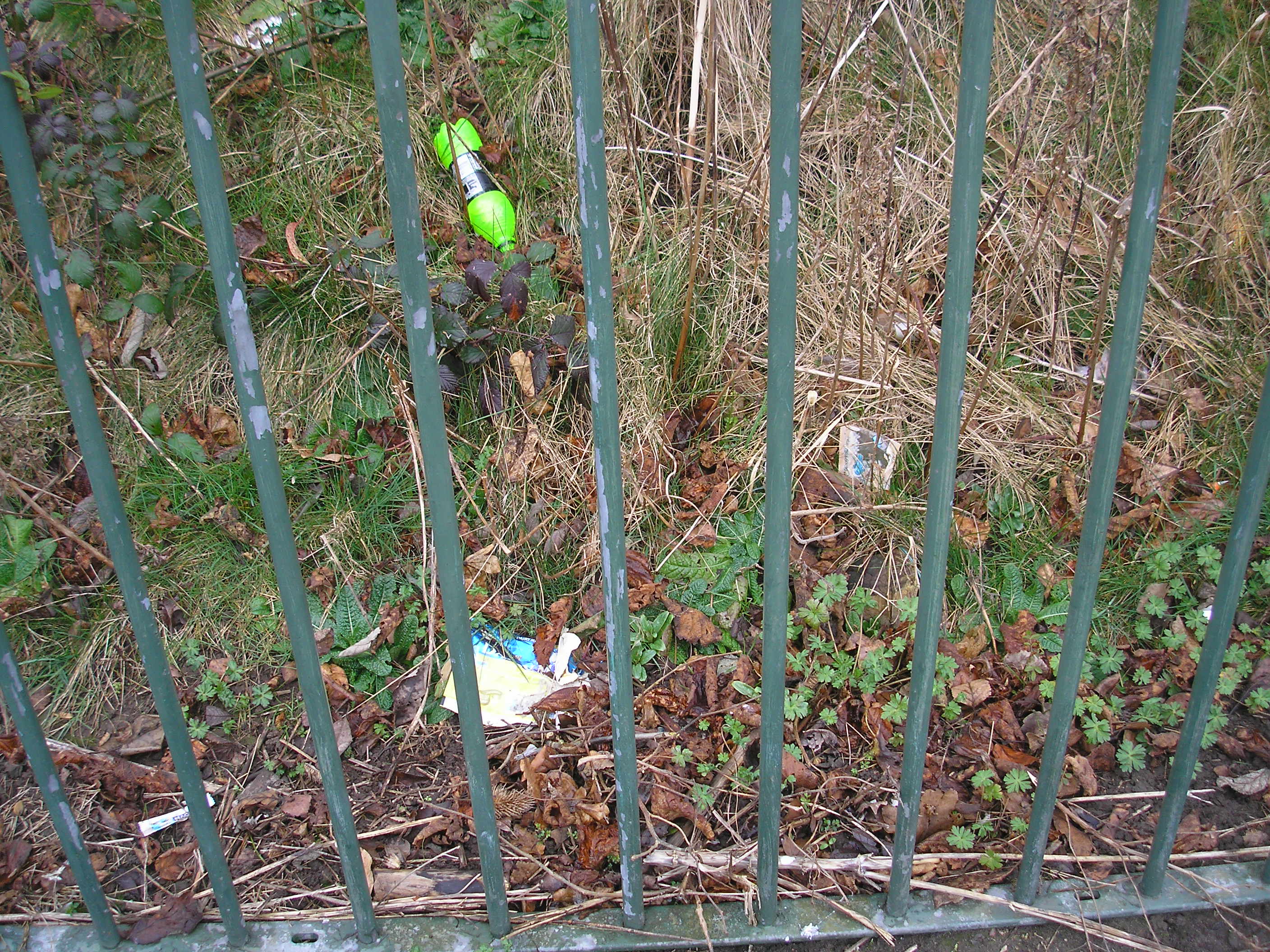
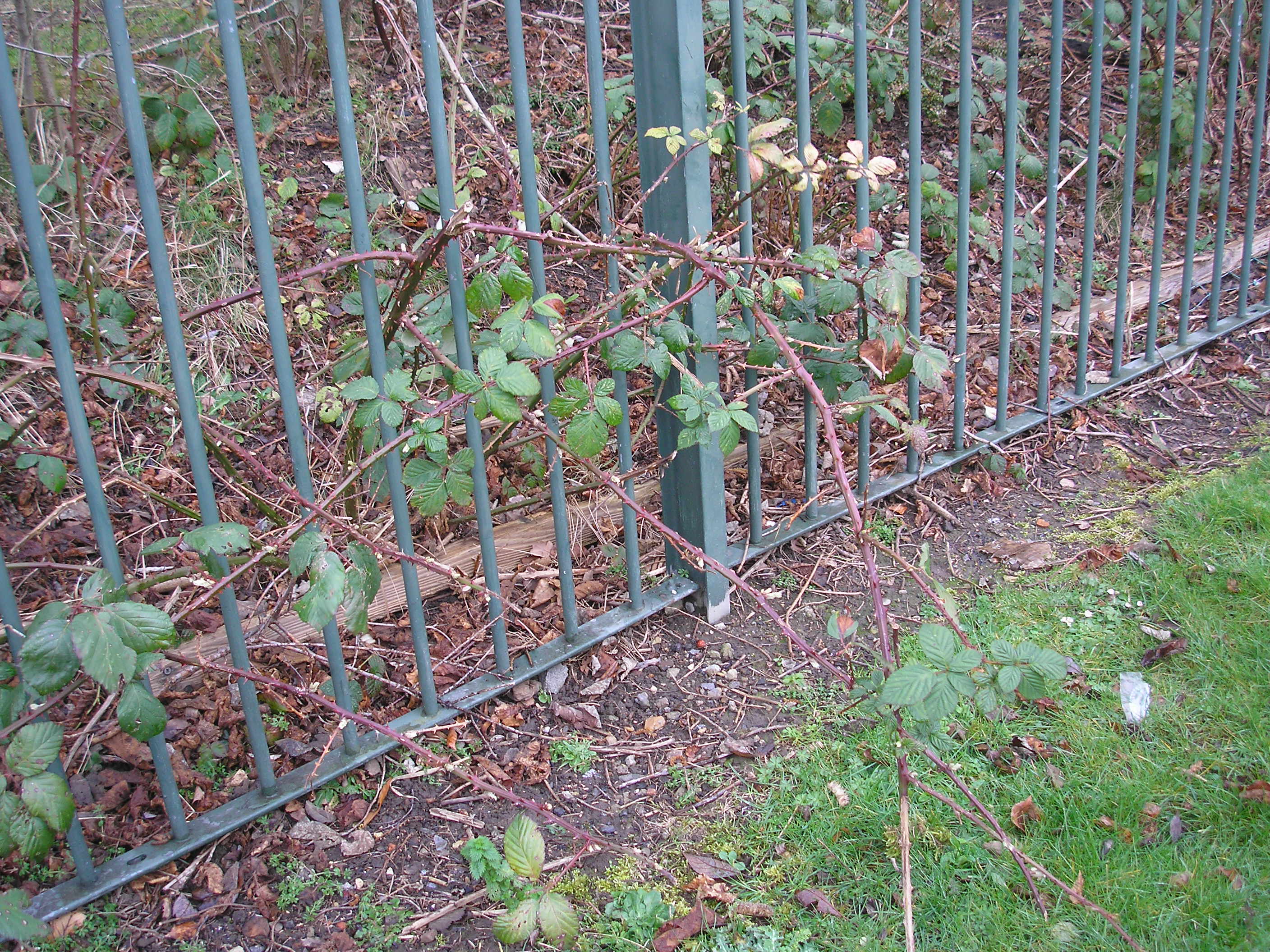
Many thanks to Paul and Lesley for their great help by volunteering to trim back the dense overgrown vegetation west of the gate, ready for fence painting and then some new planting soon. On the 17th March we finally managed to treat one side (not the road side) of the Nelsons Lane fence with a wood preservative, having waited first for a few consecutive days of dry weather.  We are hoping to treat the road side of the fence from the playground to Hob Moor Terrace next week, weather permitting.  Meanwhile, alas, that side doesn’t look as tidy as we would wish but it should look much better soon. We spent our regular 1st-sunday-of-the-month volunteer day on March 2nd clearing rubbish and brambles from around the outside of the childrens’ playground.  Litter gets trapped behind the railings but there was also a safety problem for children from prickly brambles and roses growing through.  Pam Brown’s photos below illustrate the problem being addressed.

OLYMPUS DIGITAL CAMERAOLYMPUS DIGITAL CAMERA

MCT January & February 2014 Activities

We were blessed with sunshine during our regular third-Thursday-of-the-month volunteer day on 20th February and made good progress with pruning back the overgrown roses beside the gate to reveal 3 nice holly trees and a small wild honeysuckle.  There are already signs of vigorous new growth from young rose plants around the edge of that area.  Paul Abbott (right below, caught on camera by Pam Brown) was a welcome addition to our volunteer team.

OLYMPUS DIGITAL CAMERA

Sadly on Valentines day, some time after 8 in the evening, some thoughtless individual removed the gate at Nelsons Lane; we say “thoughtless” because, when properly closed, the gate reduces the risk of small children or dogs or running out into the road.  MC Trustees are very grateful to John Wood, a local resident, who responded to our notice on the gate post asking for any info.  While on a walk John spotted where the gate had been dumped and gave us a call.  Fortunately it was not badly damaged and was re-hung by MCT volunteers the following Tuesday morning.

024025

The strong winds recently brought down some large branches from the crack willows.  A couple were hanging dangerously balanced on other trees.  When this happens we bring them down to ground level for safety and remove them as quickly as possible.

We were blessed with some bright sunshine on our Ist-Sunday-of-the -month volunteer day in February, caught on camera below by Pam Brown.  The time was spent reducing the excessive amount of woody material on the forest floor beside the Nelsons Lane gate.

OLYMPUS DIGITAL CAMERA

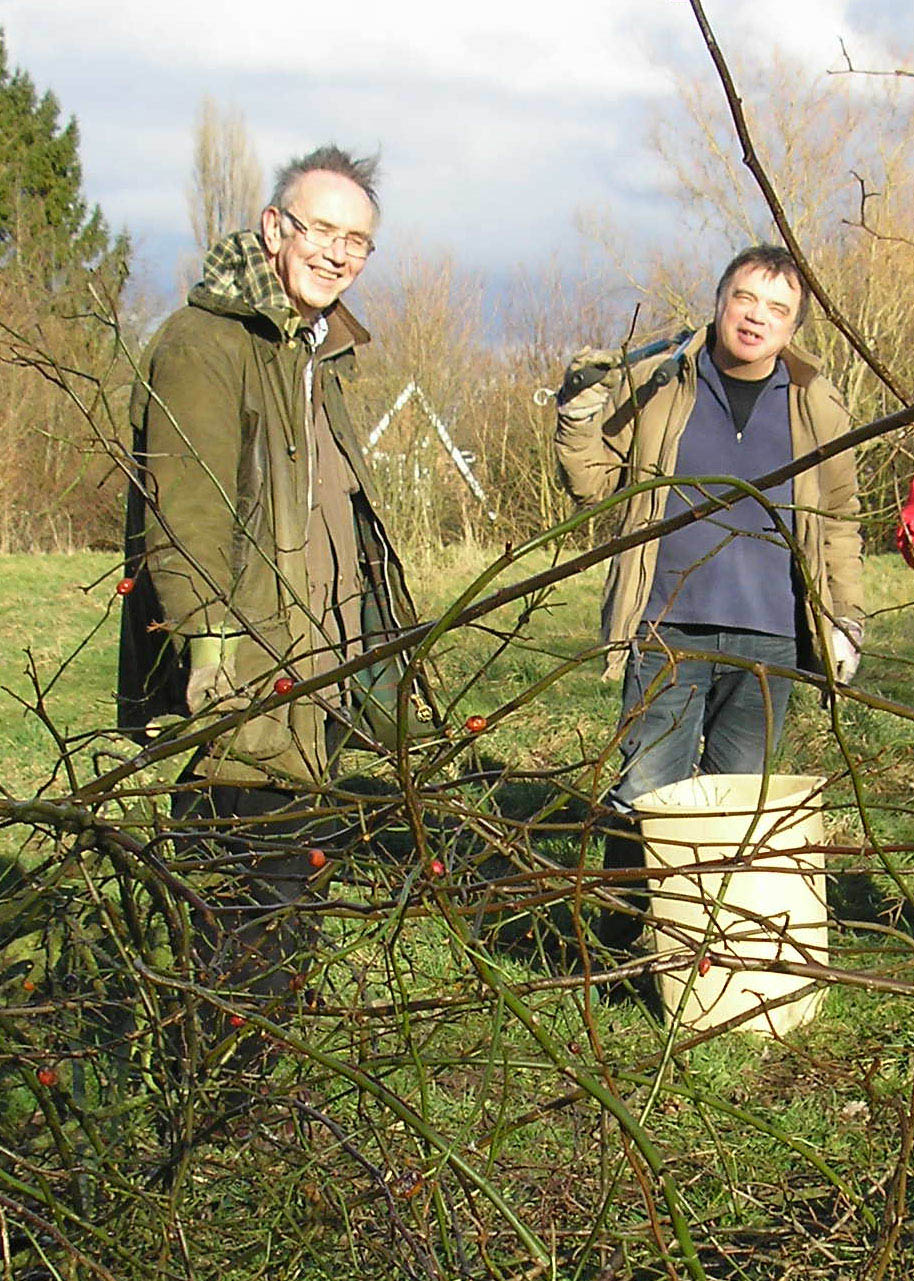
Some happy volunteers at the MCT volunteer day on February 2nd.

The heavy rainfall and mild temperatures mean that the soils at the Mayfields Open Space are almost constantly saturated.  Some water drains from the bunds and onto the path.  In places, the build up of organic soil at path verges means that the path is now below the verge level.  We have been going out in (and after) heavy rain and lowering the soils beside the path where puddles had formed.  This then allows the puddle water to drain off of the path.  Eventually the plan is to ensure free drainage along the full length of the path.

We have continued in early January to trim overhanging branches that drop so much plant litter onto the path.  Use of a new pole-saw allows us to reach up to about 21 feet above ground level.  We are still trying to minimize use of power tools to keep the site as peaceful as possible.  We have also, of course, been raking litter off of the path, bagging it, and either composting it on site or taking bags of litter off site for composting.

On a cheery note, some of our local provenance seeds are starting to germinate, including wild honeysuckle.  More wildflowers will be planted soon.  Foxglove plants from Mike Ridealgh are also doing well.

MCT December Activities

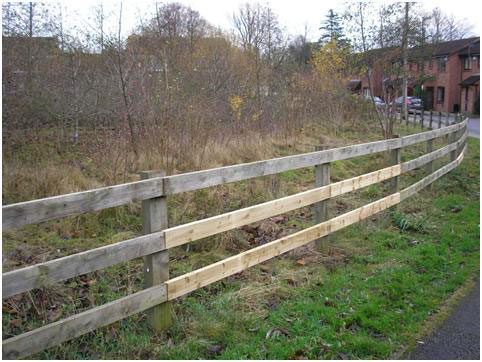
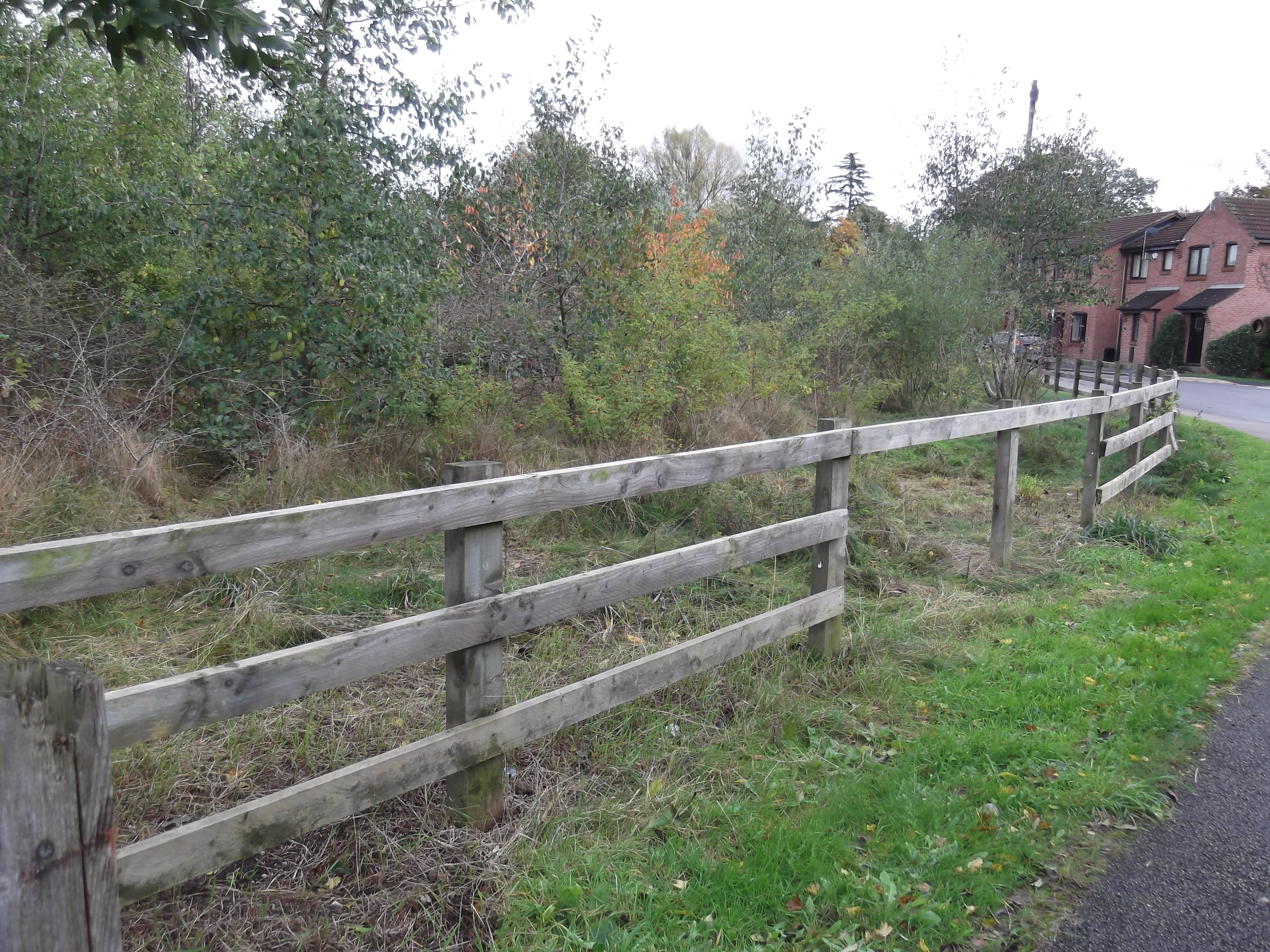
The mild weather in the latter part of November really helped us make progress on the site, especially with our work on the path.  We have been clearing leaves off the path at intervals before they turn to humus and mud both near Nelsons Lane and near Little Hob Moor.  The narrowest sections of the path near Little Hob Moor have been restored (by scraping back encroaching grass and soil) to their former width.  This appears to be dramatically improving drainage of surface water.  The protruding root on the corner of the path was a tripping risk, so has been carefully reduced.  We are generating a clear strip at either side of the path which will be grassed over in the spring.  We have added stone chips to the very muddy part of the path at the end of the western bund in the interests of safety and for the comfort of users.  At the end of November we trimmed several large branches from willows and some other species where they posed a possible future risk to adjacent properties.  We discuss what we plan with residents concerned first whenever possible.  At the time of writing we have just started to replace missing timber from the fence along Nelsons Lane, which should reduce the (admittedly small!) risk of dogs or small children running into the road.  We are also replacing the two broken horizontal bars there.  Photos below by Pam Brown show part of the fence after and before repair.

Fence-repair0001DSCF0456The log pile has been moved back from near the path near Little Hob Moor as it was too close to the edge;  it’s been reassembled as a mini rustic fence, which hopefully will reduce the risk of dogs running into the adjacent back gardens.

MCT November Activities

Introduction:  MCT are committed to the care of the Mayfields area, especially to the north of Nelsons Lane, for the benefit of the community and wildlife and the landscape.  If you can spare just a few hours a month to help us as a volunteer, we’d love to hear from you.  Details are on our contacts page.

We finished clearing most of the patch of land immediately adjacent to the fence along Nelsons Lane and hope soon to replace missing timber and treat the fence with preservative (depending upon the weather!).

The rainy days in early November helped us to identify where the puddles and muddy areas were starting to reoccur on the path as it approaches Little Hob Moor.  This section, like that near the gate, had been a real problem over recent years. A lot of effort has therefore been directed at scraping back mud and grass to restore the path in that area back to its original width (over recent years the width there had halved!).  This also helps with drainage.  We have cut back an Elder on the east side, which, unfortunately, was overlapping the path excessively and posed a risk to taller users in the dark, and have started to remove some of the overhanging branches and the dead wood and trim the willows to the east of the path. We’ve been very encouraged by positive comments from walkers (with and without dogs or pushchairs), cyclists and joggers, and especially by the little lad out with his dad who said he wants to help when he’s a bit bigger!

MCT October Activities in 2013

We have taken advantage of recent heavy rain to locate the deepest puddles and muddiest patches on parts of the path to prioritize path repair areas.  You may notice that in places we are slowly trying to restore the path to its original width.  This removes mud, reduces grass encroachment and makes passing easier for path users.

Some work will be done on trimming tops of younger willows soon, to keep these to a manageable size in the longer term, especially where ultimately they could become dangerous to people and/or property.

At our advertized volunteers’ day on October 16th a group, mainly from the University of York, worked through the afternoon rain to measure soil pH at 2 depths at many points across the site.  The survey confirmed the calcareous nature of the soils and showed expected effects on soils of tree growth, the path construction and local topography.  This bodes well for greater establishment of field scabious on the site.

Work has started on tidying the patch of land adjacent to the playground along Nelsons Lane.  Some small trees and shrubs will be removed or pruned to improve vision of road users around the bend in the Lane.  The number of thistles is being reduced (to prevent these become a major problem as they spread) and the diversity of bee/butterfly-friendly wildflowers will be improved by selective reseeding.

Mike Ridealgh continued his wildflower species survey on October 12th; more than 50 species have now been found on the site.  We hopefully will be increasing numbers of some scarce species using seeds of local provenance.  200 freshly-lifted English bluebells of local provenance have been purchased and are being planted at the northern end of the western bund to see how well they establish in the dappled shade there.  We hope to establish clumps of local foxgloves there too.

The start of October

The good weather throughout much of September allowed us to make good progress on reducing heights of overgrown Hazel and Dogwood along the western bund and removing large amounts of dead plant material, especially from the overgrown rose varieties. Finishing this on the western bund will be a priority in early October.  Most cut leafy material is bagged and taken off site for composting, to reduce imacts of atmospheric nitrogen pollutant deposition on the site.  Eventually though small compost areas will be established on the site too, partly for habitat creation.  As in our plan we have been improving the path to try to avoid it becoming unpassably muddy in places.  Near the gate at Nelsons Lane this involved removal of turfs that had grown over the main original path, and  breaking up the surface of the path and sieving to remove the excessive amounts of fine material present.  This should improve drainage considerably but we will be watching closely in the next heavy rain.  At least the path now passes on the correct side of the dog waste bins!  Also, as in our plan, we have mown grass strips either side of the path (to 7.5 cm height)  to reduce grass  encroachment and encourage smaller wildflowers.  Grass content (especially large tussocks) has been reduced slightly by cutting and/or pulling on the main meadow area to facilitate  growth of taller wildflowers.  Some reseeding is envisaged for October.  At the start of October numerous thistles by the fence at the south of the site were removed by hand weeding to prevent excessive seeding making these a major problem in future (as happened on Hob Moor).  The size of willows near the gate is also becoming a problem and trimming is urgently needed.  We had to remove 3 dead Scots Pine which had been killed there by excessive shading and water and nutrient stress.

MCT activities in August & September 2013

September 2013 Activities:

By September 9th we had managed to work on trimming hazels and dogwood and dead lower braches on specimen trees for 9 days. There has been an amazing amount of dead twiggy rose branches towards the middle of the western bund, which, coupled with the overgrown shrubs,  was starving trees of light.  A small amount of standing deadwood is ecologically valuable, but too much can have a deleterious impact on live trees.  Several trees were also suffering from water and nutrient stress, so lower braches were often sadly totally dead to 2 m or more.  You should now be starting to get a much better view of several of the Oaks, Scots Pines, Ash, Alder, Siver Birch and Beech, and some rather straggly Hawthorn and a nice patch of Blackthorn.  We have left any live rose branches, as several passers-by commented on how nice the rose hips are starting to look and they are a useful food source.  We’ve left a neat pile of longer pieces of cut wood, some of which may be used south of Nelsons Lane.  To keep the sight attractive for you the bulk of the trimmed shoots have been cut to 10-cm lengths and taken off site for composting.  Many thanks for the many kind comments on how much better the site is looking.

August 2013 Activities: 

Contractors for CYC have recently mowed the meadow and taken the cut material off the site with a view to aiding re-establishment of wildflowers.  Our subsequent recent plant biodiversity survey at the time identified 40 wildflower species around the site, but many were in small numbers and at the margins because of aggressive competition from grass species.

18 August: Jacqui North and Malcolm Cresser went round the Mayfield Site on Sunday evening with bat detectors.  Several pipistrelle bats were detected and some could be seen circling for food, especially between the north side of the pond and Nelsons Lane.  It may well be that the bats are making use of the mature conifers in that area.  They also noted that plant biodiversity on the meadow area was showing encouraging signs of improvement.

19-21August:  We have obtained the first of 3 quotes for improving the path from Nelsons Lane to Little Hob Moor.  This has been given priorirty as mud and ice on the path were major concerns in our earlier survey.

Because of delays in getting the license from CYC we submitted a highly detailed request to CYC to start trimming the seriously overgown hazels and dogwoods on the western bund.  Though acknowledged, unfortunately the appropriate person was unable to grant perrmission to start before the bank holiday weekend.  These delays make it hard for us to comply with nature’s natural timetable!

31st August:  We got permission yesterday to start trimming back the seriously overgrown hazels and dogwoods and made a start on that this morning.  We are doing it slowly and carefully so that passers-by should only notice small improvenents to the shrubs and see more of the more important (and potentially beautiful!) trees behind.  We were encouraged by the friendly responses we got from dog walkers and local residents when we explained what we were trying to achieve for them.